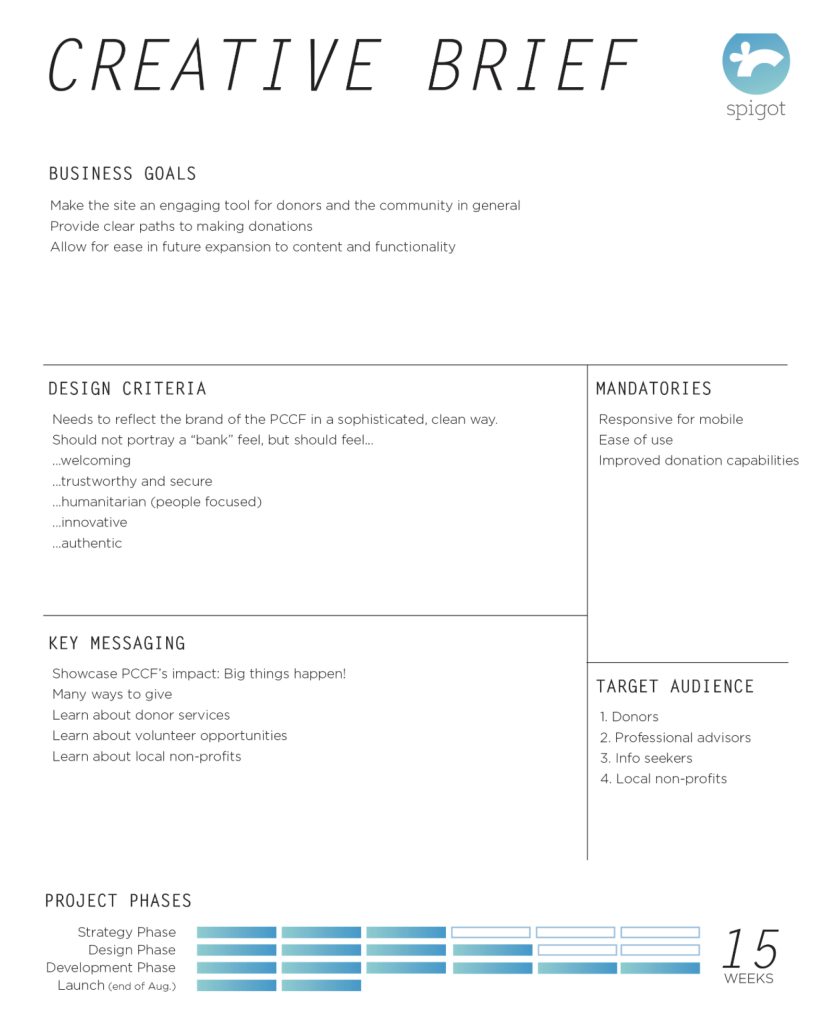
There is no one-size-fits-all formula for writing a UX design brief. Design briefs vary from business to business. Additionally, several requirements and complexities require different approaches. Therefore, you need to create customized project briefs. However, here is the list of the 11 most common components essential for writing a design brief.
- A brief introduction to your business:
The foremost part of a UX design brief is the introduction to your business. Mention the following essential elements of your business.
- Core values
- Objectives and goals
- Tone and voice
- Firm size
If you have a brand identity, elaborate it to your designers for a personalized project brief. However, keep your design brief concise yet informative.
For a start-up, a generalized formula of business ambition will work. In addition, add links to the different sections of your business for a detailed analysis.
Project scope plays a vital role in defining the limits of a design project. It covers an overview of the tasks from the beginning to the end of the project. Hence, you will get an estimate of the complexity and length of the project.
It should include:
- the number of tasks to complete
- responsibilities
- total number of individuals
- expectations from the designers.
Project scope is different for different types of design projects. Therefore, an app design brief will differ from a website design brief. This uniqueness leads to a creative project brief for every single project.
It is worth mentioning that you can not achieve the desired outputs without the project scope. Your team may add unnecessary features to your design project, resulting in a heavy budget and loss of time. Therefore, always include the project scope in your design brief draft.
Design goals have a central focus in a project brief. These goals define the expectations you want from your product or service. The goals may be:
- better user experience
- mobile-friendly app or product,
- improved performance of an existing product, etc.
You need to tell designers about the target goals. All the information needs to be specific. In this way, they may act accordingly to achieve the expected aims.
Difference between project goals and objectives:
However, it is important to know that goals differ from objectives. Goals define the overall expectation from a product. However, an objective is to achieve a specific desirable task.
For example:
Creating a product’s UI design is a goal, but increasing conversions of a landing page by 10% is an objective.
- Focus on the target audience:
A product or service won’t bring desired results if you don’t know your target audience. Therefore, make a general concept of your target audience in the project brief. You can take help from the existing user research or business goals to identify potential customers. Then, include your primary target audience in your UI UX design brief to attain the best results.
Also, mention the expected project deliverables in your project brief you want to attain. The major project deliverables are:
- User research
- User personas
- User flows
- Customer journey maps
- Moodboards
- Wireframes and
- Prototypes
Make sure you have selected all the deliverables according to the user research and business goals.
Competition has an integral part in deciding the final project design. It helps to create a better design strategy to excel in the market. Therefore, a deep analysis of the market competitors is required.
In this regard, analyze your direct and indirect competitors. Make a list of those competitors and include it in the design brief. Designers will get a better understanding of the competition. Thus, they will try to outperform your business in design success.
- Suggest technical specifications:
Technical inspection is an integral UX strategy. It is mainly connected to later UX UI deliverables. However, you can mention it in the design brief to improve the existing design.
Different technical requirements for a design brief are:
- Backend technical development:
Designers may benefit from the technical documentation about the product background. Identifying a design’s technical requirements helps create a responsive front design. In addition, it identifies the accessibility and user experience issues. Therefore, it should be included in the design brief. However, it is not necessarily required in the initial stages. You can include it for better results.
Provide business analytics in the form of customer journey maps, buyer personas, user flow, etc. These will help to create a targeted design brief.
- Design and technical tools:
Color, font, format, design templates, management tools, and frontend libraries and folders provide an extra edge if provided in the initial stage.
- Provide existing components and references:
References help to have a general idea of the actual design. Therefore, if you have any references to different apps, design strategies, or websites, provide them to the designers. In this way, they can better understand the final output.
Apart from it, provide designers and product managers with the existing design elements. These include brand logo, color, design strategy, mood boards, UI UX tools, design kits, etc. Also, mention the improvements if you want to update an existing product or service design. These will help you acquire a clear design brief and mechanism.
Deadlines and milestones tell you the exact boundaries of a design project. They play a central role in the success of a design project. Therefore, they should be included in the project brief. they
From the user research to final corrections, all the tasks must accompany their due time schedule. In this way, you can assess the speed and quality of the project. Furthermore, they will help create a smooth flow to accomplish the UI UX deliverables.
Clear all the deals if you are hiring an outside design team. It will help you run the project process smoothly. Ensure you fix a definite budget with the designers, i.e., $500 for the overall design project. In this way, you can relieve yourself of the recurring budget schedules.
The overall budget for a project depends upon several things. These are:
- project requirements
- complexity and
- the proposal from the designers or design company (in case of hiring a remote or off-site company)
Constant communication is the key to building trust with the designers. Build a strong network with the designers via suitable communication channels.
These may include:
- Calls
- Online Zoom meetings
- Video conferences
- On-site meetings
Ask questions related to the design brief and project. Clear any ambiguity and confusion. In this way, you can have a solid network to solve any difficulties during the project strategy. Choose a suitable time for online meetings in case of different time zones.