Manipulation is a tactic often used by individuals to control or influence others for their own benefit. Recognizing manipulation techniques and learning how to respond effectively is essential for maintaining autonomy and protecting yourself from undue influence. In this comprehensive guide, we’ll explore common manipulation techniques and provide practical strategies for avoiding manipulation in various situations.
Manipulation Techniques
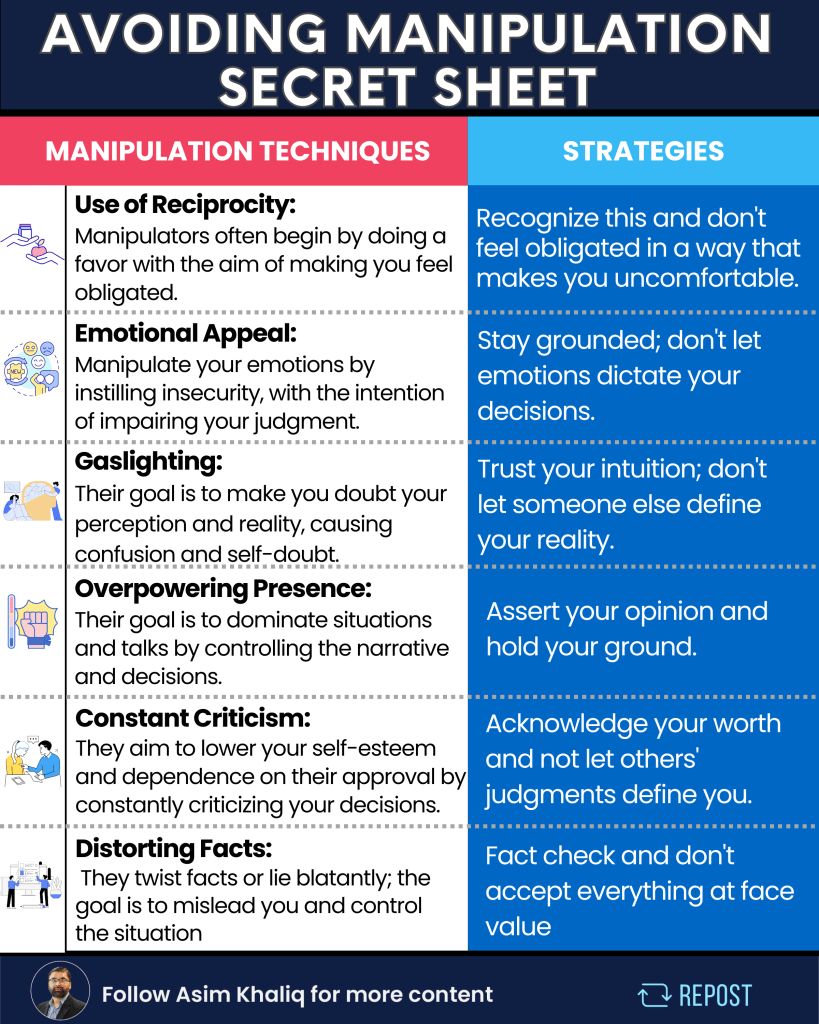
Use of Reciprocity:
Manipulators often initiate by doing a favor or offering something with the intention of creating a sense of indebtedness. This tactic aims to make you feel obligated to reciprocate, even if the favor was unsolicited.
Table of Contents
Add a header to begin generating the table of contents
Emotional Appeal:
Manipulators leverage emotional manipulation by exploiting your vulnerabilities and insecurities. By triggering emotional responses such as fear, guilt, or sympathy, they aim to impair your judgment and influence your decision-making.
Gaslighting:
Gaslighting is a psychological manipulation tactic where the manipulator distorts your perception of reality, causing you to doubt your memory, perceptions, and sanity. This technique undermines your confidence and makes you more susceptible to manipulation.
Overpowering Presence:
Manipulators often assert dominance by controlling conversations, situations, and decisions. They use their strong personality and persuasive tactics to overpower others and impose their will, leaving little room for dissent or alternative viewpoints.
Constant Criticism:
Manipulators employ a strategy of constant criticism to undermine your confidence and self-esteem. By repeatedly pointing out flaws or inadequacies, they aim to erode your sense of self-worth and foster dependence on their approval.
Distorting Facts:
Manipulators may resort to distorting facts or outright lying to manipulate your perception of reality. By presenting false information or selectively omitting details, they seek to mislead you and gain control over the situation.
Educate yourself about common manipulation tactics to recognize when you’re being manipulated. Awareness is the first step in protecting yourself from manipulation.
Set Boundaries and Assert Yourself:
Establish clear boundaries and assert your rights in relationships and interactions. Communicate assertively and don’t be afraid to say no when something doesn’t feel right.
Trust Your Intuition:
Listen to your gut instincts and intuition. If something feels off or too good to be true, trust your instincts and proceed with caution. Don’t allow others to dictate your reality or manipulate your emotions.
Practice Emotional Regulation:
Develop emotional intelligence and practice emotional regulation techniques to maintain control over your feelings and reactions. Stay grounded and avoid making impulsive decisions based on emotions.
Seek Independent Verification:
Verify information independently and don’t rely solely on the word of others, especially if they have a vested interest in manipulating you. Fact-check information and seek multiple perspectives before making decisions.
Cultivate Self-Worth:
Build self-confidence and cultivate a strong sense of self-worth. Recognize your own value and don’t allow others’ judgments or criticisms to define you. Surround yourself with supportive and empowering individuals who uplift and validate you.
By equipping yourself with knowledge about manipulation techniques and implementing these strategies, you can safeguard yourself against manipulation and maintain autonomy in your personal and professional life. Trust your instincts, set boundaries, and prioritize your well-being to avoid falling prey to manipulation tactics.
Protecting yourself from manipulation requires awareness, assertiveness, and emotional intelligence. By recognizing common manipulation techniques and implementing effective strategies, you can safeguard your autonomy and well-being in various situations.
Trust your instincts, set boundaries, and prioritize your mental and emotional health. Remember that you deserve to be treated with respect and dignity in all interactions. Stay vigilant, stay empowered, and don’t hesitate to seek support if you find yourself in a manipulative situation.
FAQs.
How can I recognize manipulation in a relationship?
Look for patterns of behavior such as constant criticism, gaslighting, or attempts to control your actions or decisions. Trust your instincts and pay attention to how you feel in the relationship.
What should I do if I suspect someone is trying to manipulate me?
Confront the individual calmly and assertively about your concerns. Set clear boundaries and communicate your expectations for respectful behavior. If the manipulation continues, consider limiting or ending contact with the person.
Can manipulation occur in professional settings?
Yes, manipulation can occur in various professional settings, including the workplace. Be mindful of power dynamics and manipulation tactics such as coercion, favoritism, or manipulation of information.
How can I build resilience against manipulation?
Focus on building your self-confidence, assertiveness, and emotional resilience. Practice self-care, surround yourself with supportive individuals, and seek professional help or counseling if needed.
Is it possible to recover from the effects of manipulation?
Yes, with time, self-reflection, and support, it is possible to recover from the effects of manipulation. Focus on rebuilding your self-esteem, setting healthy boundaries, and learning from the experience to prevent future manipulation.