

10 Principles of Storytelling
Storytelling is an ancient art form that has captivated audiences for centuries. Whether through books, movies, or verbal tales passed down through generations, compelling narratives can evoke emotions, inspire action, and ignite imaginations. In this article, we delve into the ten principles of storytelling, equipping you with the tools to craft narratives that leave a mark.
Introduction to Storytelling
“Storytelling” refers to the art of effectively conveying a message. Or experience through a sequence of events. It serves as a means of communication, allowing individuals to share their ideas, beliefs, and experiences with others.
The importance of storytelling lies in its power to engage and connect with an audience on a deeper level, fostering empathy and understanding.
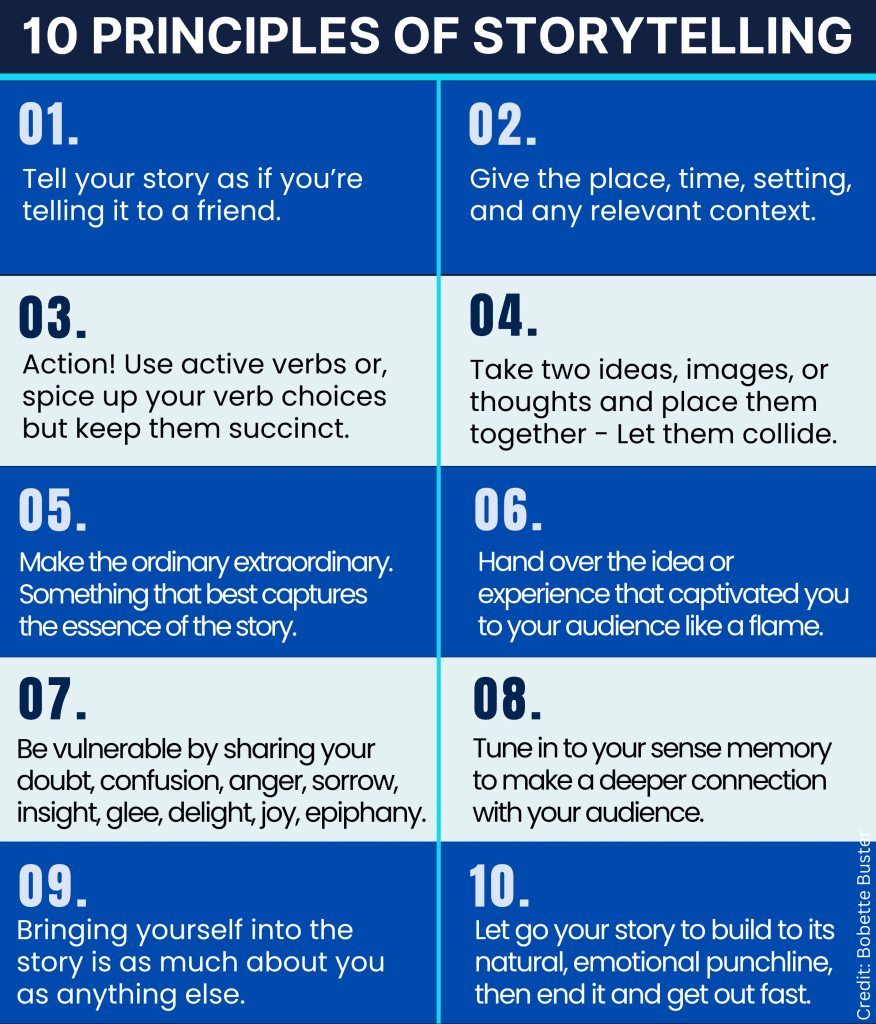
Tell your story as if you're telling it to a friend.
It’s crucial to adopt a conversational tone when crafting a story, whether for personal memoirs, marketing campaigns, or brand narratives. Imagine yourself sitting down with a close friend, recounting an experience, or sharing a moment of insight.
This approach humanizes the narrative, making it relatable and engaging for your audience.
- Engage your audience with warmth and familiarity.
- Use conversational language to build a personal connection.
- Share anecdotes and details as you would in a casual conversation.
Give the place, time, setting, and any relevant context.
Context provides the backdrop against which your story unfolds. Whether it’s a bustling city street at dusk or a serene countryside retreat on a summer afternoon, setting the scene transports your audience into the heart of the narrative. By vividly painting the environment, you immerse readers in the experience, making it more memorable and impactful.
- Establish the scene with descriptive details.
- Set the stage for your story by painting a vivid picture of the environment.
- Provide context to help listeners understand the significance of the events.
- Clarify the time frame to anchor the story in a specific moment.
- Use sensory language to evoke a sense of time and place.
- Incorporate historical or cultural context to enrich the narrative.
- Highlight the significance of the setting to the overall story.
Action! Use active verbs or spice up your verb choices.
Active verbs infuse your story with energy and momentum, giving the narrative purpose and clarity. Choose dynamic verbs that convey action and emotion, avoiding passive voice whenever possible. By keeping your language concise and engaging, you maintain the reader’s interest and propel them through the story with ease.
- Utilize dynamic verbs to propel the action forward.
- Choose verbs that convey movement, emotion, and intensity.
- Avoid passive voice to maintain momentum and engagement.
- Experiment with vivid and evocative language to create a sense of energy.
- Trim unnecessary words to preserve clarity and conciseness.
- Vary sentence structure to add rhythm and flow to the narrative.
- Use onomatopoeia or sensory verbs to create immersive experiences.
You might Like these blogs




Place two ideas, images, or thoughts together.
Creative juxtaposition sparks innovation and insight, challenging conventional thinking and inspiring new perspectives. When two seemingly disparate elements collide, they generate friction and energy, leading to unexpected connections and revelations. Embrace the power of juxtaposition to inject depth and complexity into your storytelling, leaving a lasting impression on your audience.
- Create juxtaposition to highlight contrasts or connections.
- Combine disparate elements to spark creativity and intrigue.
- Use metaphor or analogy to draw unexpected parallels.
- Explore the tension between opposing concepts to drive narrative conflict.
- Allow collisions to generate new perspectives and insights.
- Use irony or paradox to challenge assumptions and provoke thought.
- Introduce unexpected twists or reversals to keep the audience engaged.
Make the ordinary extraordinary.
Everyday moments hold the potential for extraordinary storytelling. Whether it’s a mundane task transformed by a moment of insight or a chance encounter that alters the course of a life, find the extraordinary within the ordinary. By spotlighting the subtle nuances of everyday life, you illuminate the universal truths that resonate with readers profoundly.
- Find the extraordinary within the mundane aspects of life.
- Highlight the beauty, humor, or significance of everyday moments.
- Infuse ordinary scenes with emotion, depth, and meaning.
- Elevate commonplace experiences to resonate with universal truths.
- Use storytelling techniques to transform the ordinary into the extraordinary.
- Emphasize the uniqueness of ordinary experiences to capture attention.
Transform the Ordinary into Extraordinary
Passion is contagious, and sharing your enthusiasm with others ignites their curiosity and engagement. Whether you’re recounting a personal anecdote, presenting a business proposal, or delivering a keynote address, infuse your storytelling with genuine passion and conviction. You inspire and captivate your audience by sharing your excitement and enthusiasm, leaving them eager to learn more.
- Convey the emotional impact of the experience to your audience.
- Use vivid language and imagery to ignite curiosity and interest.
- Allow listeners to experience the story through your words vicariously.
- Maintain a sense of urgency and excitement to keep listeners engaged.
- Create suspense by withholding critical details until the opportune moment.
- Use pacing and timing to build anticipation and draw the audience in.
Share Your Passion Like Igniting a Flame
Vulnerability is the key to authenticity and connection in storytelling. You invite readers into your world by sharing your raw emotions and innermost thoughts, forging a deeper bond based on trust and empathy. Whether you’re expressing doubt, sorrow, or joy, embrace vulnerability as a strength, not a weakness, and watch as your audience responds with compassion and understanding.
- Embrace authenticity by revealing your genuine emotions and vulnerabilities.
- Share personal struggles and triumphs to create empathy and connection.
- Explore the full spectrum of human experience, from joy to sorrow.
- Offer insights gained from moments of doubt or revelation.
- Foster a sense of intimacy and trust with your audience through openness and honesty.
- Use humor or self-deprecation to lighten the mood and create relatability.
Embrace Vulnerability in Your Narrative
Vulnerability is the key to authenticity and connection in storytelling. You invite readers into your world by sharing your raw emotions and innermost thoughts, forging a deeper bond based on trust and empathy. Whether you’re expressing doubt, sorrow, or joy, embrace vulnerability as a strength, not a weakness, and watch as your audience responds with compassion and understanding.
- Embrace authenticity by revealing your genuine emotions and vulnerabilities.
- Share personal struggles and triumphs to create empathy and connection.
- Explore the full spectrum of human experience, from joy to sorrow.
- Offer insights gained from moments of doubt or revelation.
- Foster a sense of intimacy and trust with your audience through openness and honesty.
- Use humor or self-deprecation to lighten the mood and create relatability.
Engage Senses for Deeper Connection
Our senses play a decisive role in shaping our memories and experiences. When crafting a story, tap into your memory to evoke vivid sensations and emotions in your audience. Describe the sights, sounds, smells, tastes, and textures that define the moment, transporting readers to the heart of the narrative. By engaging multiple senses, you create a rich and immersive storytelling experience that resonates on a visceral level.
- Recall sensory experiences to enrich your storytelling.
- Use vivid descriptions to evoke memories of sight, sound, smell, taste, and touch.
- Transport listeners to different places and times through sensory details.
- Create a multisensory experience that engages the imagination.
- Appeal to universal sensory memories to create a shared emotional resonance.
Infuse Your Personality into the Story
As the storyteller, your unique perspective and voice are integral to the narrative. Feel free to inject your personality, experiences, and insights into the story, adding depth and authenticity to your storytelling. Whether you’re sharing personal anecdotes, reflecting on life lessons, or expressing your worldview, let your individuality shine through, creating a personal and profound connection with your audience.
- Share personal anecdotes or reflections to add depth and authenticity.
- Connect your own experiences to the broader themes of the story.
- Strike a balance between self-revelation and maintaining focus on the narrative.
- Use storytelling as a means of self-expression and self-discovery.
- Allow your personality to shine through in your storytelling style.
Conclude Swiftly for Lasting Impact
Every story has a natural arc, building tension and momentum until it reaches a satisfying conclusion. When crafting your narrative, trust in the power of your story to carry itself to its emotional punchline. Resist the urge to over-explain or belabor the point; instead, end the story decisively and gracefully, leaving readers with a lingering sense of resonance and closure. Knowing when to let go allows your story to resonate deeply with your audience, leaving a lasting impression long after the final word has been read.
- Deliver a satisfying resolution or emotional payoff for the audience.
- Avoid unnecessary embellishments or drawn-out conclusions.
- End the story on a high note to leave a lasting impression.
- Respect the audience’s time and attention by concluding the narrative promptly.
- Use a memorable closing line or image to leave a lasting impression.
FAQs.
- How can I improve my storytelling skills?
Practice regularly, study different storytelling techniques, and seek feedback from others to refine your craft.
2. What role does empathy play in storytelling?
Empathy allows storytellers to connect with their audience on a deeper level, fostering understanding and emotional resonance.
3. What are some common pitfalls to avoid in storytelling?
Avoid clichés, stereotypes, and predictable plotlines; strive for authenticity, originality, and emotional depth.
4. How can I create memorable characters?
Develop well-rounded personas with unique traits, motivations, and flaws, and explore their complexities through actions and dialogue.